MODULE 02 — INSTITUTIONAL MEMORY
What happens when your best operator retires?
70-90% of how your plant actually runs was never written down. It works alongside your crew and the work they do every shift. OCore captures it as the work happens, so when people move on, the knowledge stays.
The knowledge that matters most is the hardest to capture.
Most utilities run on two manuals:
- The outdated physical copy in the records room.
- The practical knowledge the operators carry: which coagulant dose works when the source water turns, which blower sequence avoids a surge.
The gap started at day one. A plant is engineered in theory, then commissioned into a different reality, and the fixes that made it actually run stayed in the PLC code and the operators' heads, never the manual. As regulations and operations change, the written record only falls further behind.
Someone calls in sick.
The operator who knows that treatment process inside and out isn't here today. Their replacement checks the SOP, but the SOP describes the textbook approach, not what actually works at this plant.
Someone transfers to another department.
Five years of institutional knowledge about equipment quirks, seasonal adjustments, and workarounds leaves with them. Nobody thought to ask because nobody knew what to ask.
Someone retires.
Decades of operational intuition that kept the plant running smoothly are gone. The exit interview captures maybe 10-15% of what they know. The rest vanishes permanently.
Knowledge Capture turns the work your team already does into a record that outlasts any one operator. Daily rounds, voice notes, and the reasoning behind a call get captured in the moment, structured by the agent, and linked to the equipment they belong to. What a veteran knew is there for the next shift, and it compounds with every entry.
Operators record knowledge during work
Voice notes or quick text entries captured in the moment, not in a separate documentation session. No extra forms, no separate system to log into. Documentation isn't a second job. The agent captures knowledge as part of the work your team is already doing.
AI structures and links to equipment
The agent transcribes voice notes, extracts the equipment references, conditions, actions, and reasoning, then links everything to the relevant assets automatically. An operator mentions Pump 3 and the note is linked to Pump 3, its maintenance history, and related procedures.
Operator reviews before publishing
Nothing goes live without operator approval. The person who recorded the knowledge verifies that the AI got it right. This keeps operators in control and builds trust in the system over time.
Knowledge surfaces at the point of need
When someone encounters the same equipment or condition, the captured knowledge appears automatically. The next operator who opens Pump 3 finds what the last operator knew, in context, without asking anyone. It is searchable, contextual, and cumulative.
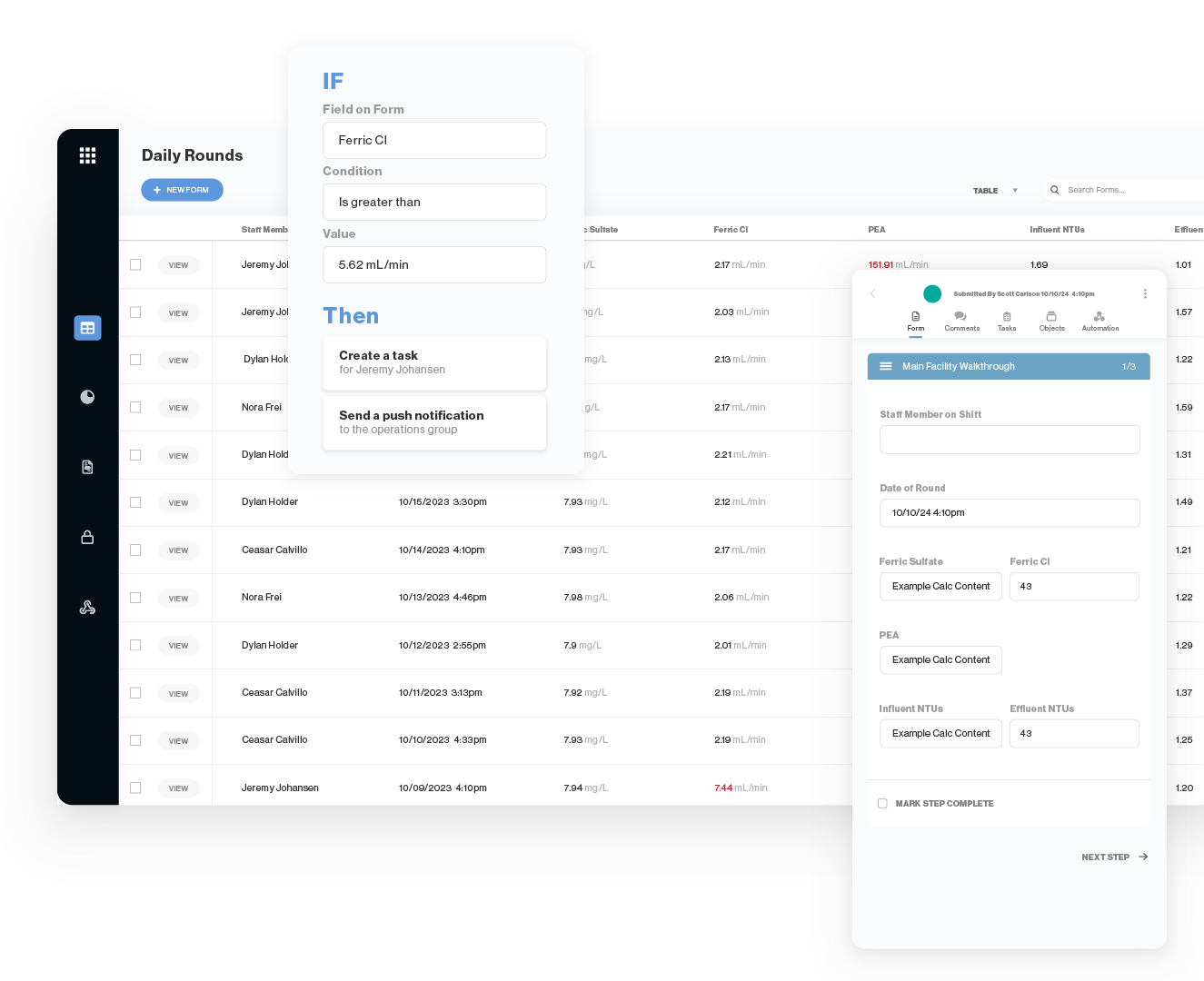
FIG. 02 — KNOWLEDGE CAPTURE
What's in the module.
Voice capture
Speak while you work. The agent transcribes it and turns it into a clean record.
AI structuring
It pulls the equipment, the conditions, the action, and the reasoning out of each note on its own.
Equipment cross-referencing
Every note links itself to the asset, procedure, and history it belongs to.
Full-text search
Find any captured knowledge by equipment, topic, operator, or keyword.
Cumulative knowledge base
The record compounds. Every entry your crew adds makes the next shift smarter.
Onboarding workflows
New hires follow structured paths through what the crew already knows.
Change one thing, update all of it
Change a requirement, a dose, or a procedure, and OCore surfaces everything linked to it, so the whole record moves at once, not just the parts someone remembers.
The cost of not capturing knowledge.
Knowledge loss prevention is difficult to quantify until the loss happens. Harvard Business Review research shows the hidden costs of knowledge loss run 20 times higher than visible recruitment and training expenses. You've tried to capture it before. SharePoint, a wiki, a documentation initiative that fizzled because operators were already running at full speed. The difference is that OCore captures knowledge as part of daily operations, not as a separate project.
70-90%
Of operational knowledge is tacit and undocumented
30-50%
Of water industry workforce eligible to retire this decade
20x
Hidden cost of knowledge loss vs. visible recruitment cost
A 30-year operator retires on Friday. For the first time, what they knew doesn't retire with them. Every voice note, every observation, every workaround they recorded is available to every operator on every shift.
- AWWA, 2024 State of the Water Industry Report: 47% of utilities cite difficulty replacing retiring veterans as their top workforce challenge.
- Harvard Business Review: Hidden costs of knowledge loss run 20x higher than visible recruitment and training expenses.
- AWWA/Water Research Foundation: New treatment plant operators at mid-size utilities require 12-18 months of onboarding before operating independently.
Start where it hurts most. Deploy one module or run them as one platform.
Request a demo